
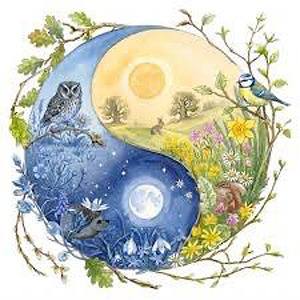
 In the practice of Feng Shui, the Spring Equinox is more than just a date on a calendar, it is the moment the Earth’s breath shifts. Known as Chun Fen, this period marks the point where day and night are in perfect equilibrium. However, this balance is not static—it is a dynamic tipping point where the dormant energy of the North (Water) officially gives way to the rising vitality of the East (Wood).
Spiritually, Spring is governed by the Wood element. Just as a sprout exerts immense pressure to break through frozen soil, Wood energy represents breakthroughs, vision, and expansion. After the “hibernation” of winter, the Equinox acts as a cosmic green light. It encourages us to move from the planning phase into the action phase. In Feng Shui, if your Wood energy is stagnant, you may feel stuck or indecisive. If it is flowing, you feel a sense of “upward” momentum in your career and personal growth. When you have too much Wood energy, you can be angry and chaotic. Write me if you’d like a 9 Star Numerology reading based on your elements and where they are this year.
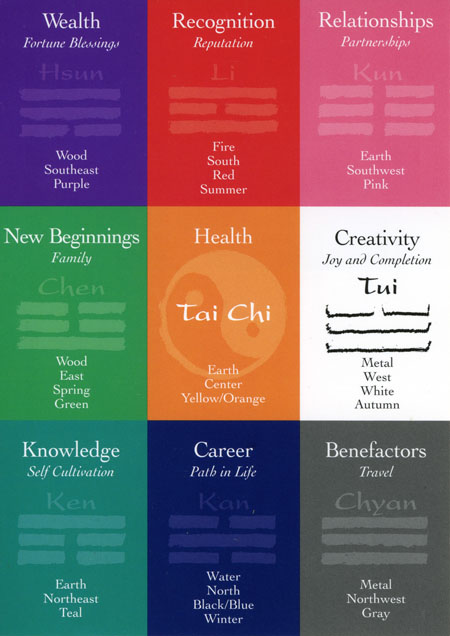
The East is the Bagua area associated with family and new beginnings. During the Equinox, the Sun rises exactly in the East, flooding this sector with auspicious Sheng Chi (breath of life).
Here are some tips for the Equinox:
- Clear the mental “clutter of the past” to make room for the “wisdom of the future.”
- Clear the physical clutter in the East of your home during the Equinox is believed to remove psychological blockages, allowing you to see your path forward with clarity.
This is the ideal time to check the “temperature” of your environment. Are there areas that are too dark and “Yin” (dusty corners, dead plants)? Or areas that are too “Yang” (chaos, overstimulation)? The Equinox invites us to find the middle path—creating a space that is energized enough to be productive, yet peaceful enough to be a sanctuary. True Feng Shui is all about balance.
Equinox Intention
In Feng Shui, an intention (or mantra) seals the deal and directs the Chi. You could recite something like this – or write it on a small piece of paper and tuck it under your chosen plant – on the morning of the Equinox to “program” the space:
“As the light returns and the Earth awakens, I align my spirit with the rising Wood. May my vision be clear, my roots grow deep, and my path expand with the ease of the turning season. I welcome new growth, vibrant health, and the wisdom of my ancestors into this home.”
Best Plants for the East Sector
In the Year of the Fire Horse, you want plants that provide steady, cooling “Wood” energy to balance the year’s heat. Avoid cacti or plants with sharp thorns that create Sha Chi (piercing energy) that can lead to arguments. I also avoid plants that are slow growing like bonsai or succulents.
Lucky Bamboo is the quintessential Feng Shui plant for the East. It grows in water, providing that “Water-feeds-Wood” synergy. Use three stalks for happiness/long life or nine for wealth. Keep the water fresh to maintain “clear” Chi.
A Money Tree with its braided trunk and five-lobed leaves (representing the five elements), it symbolizes stability and the capturing of “good fortune” as it rises.
It thrives in indirect light, making it great for an East-facing room that gets bright morning sun but tapers off in the afternoon.
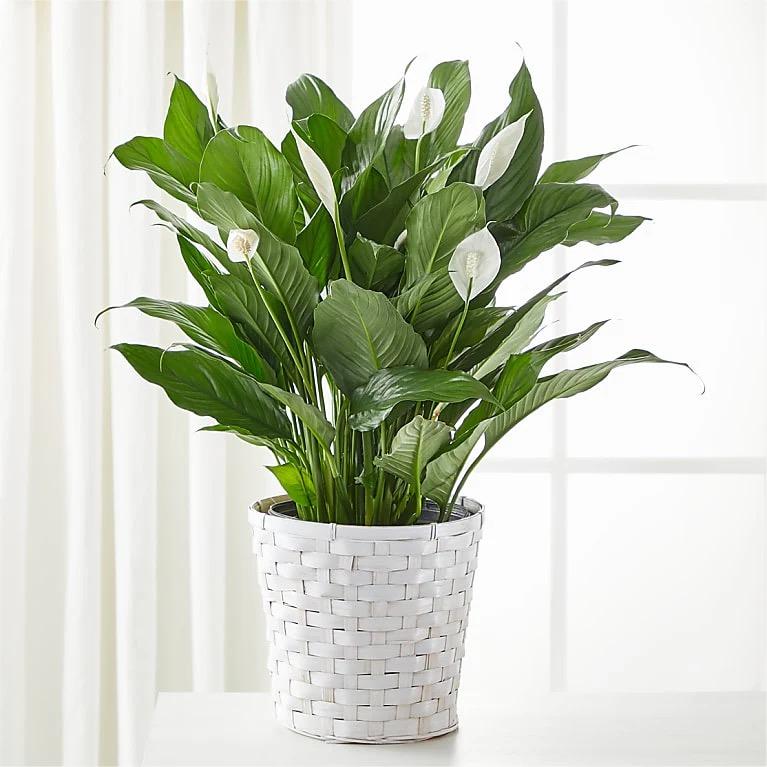
A Peace Lily is one of the best air-purifying plants. Spiritually, it “mops up” stagnant energy and replaces it with calm, Yin-balanced Wood energy. It will literally “droop” when it’s thirsty, acting as a great visual reminder to tend to your space.
If a plant in your East sector begins to yellow or die, remove it or trim the dead leaves immediately. In Feng Shui, a dying plant in the East represents “declining health” or “stunted growth.” Keep the energy vibrant to keep your momentum moving!
or call: 917-903-9390
 Its Almost Spring